
Blogs
How Structural Choice Shapes Outdoor Living Experience
Introduction: A Structural Choice That Feels Emotional
When choosing a pergola, many homeowners focus on appearance first.
But one of the most influential decisions is structural — often made quietly and early:
Should the pergola stand on its own, or be attached to the house?
This choice affects more than layout or installation.
It shapes how outdoor space is entered, used, and felt over time.
Understanding the difference between freestanding and wall-mounted pergolas
helps clarify not only what works, but what feels right.
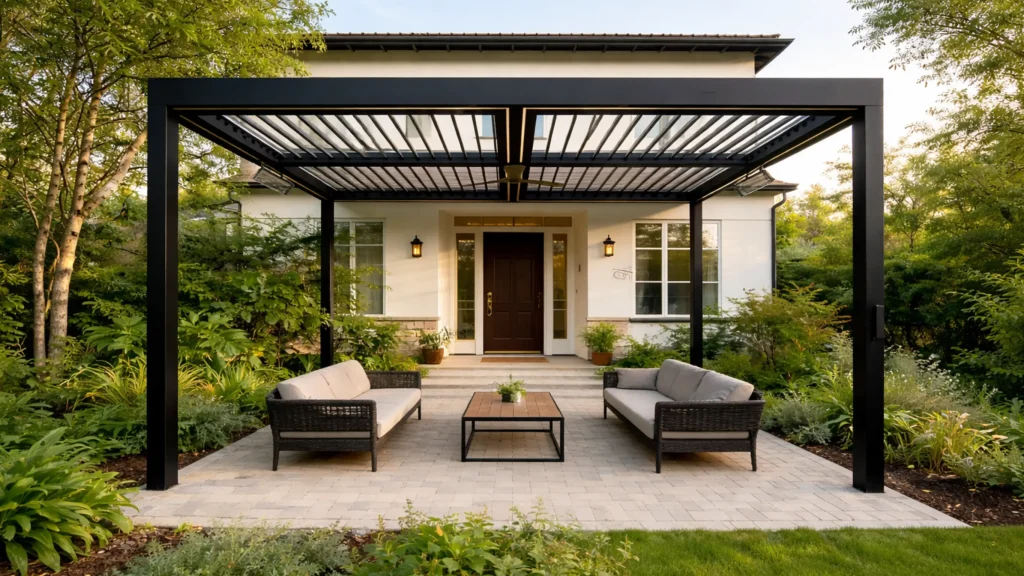
Freestanding Pergolas: Creating a Destination
Freestanding pergolas exist independently from the main building.
They are often placed in:
- Gardens
- Poolside areas
- Open yards
- Landscaped zones away from the house
How Freestanding Structures Shape Space
Because they are detached, freestanding pergolas naturally:
- Define a separate outdoor “room”
- Encourage intentional use
- Create a sense of retreat
Stepping into a freestanding pergola feels like entering a destination,rather than extending a routine.
This makes them particularly suitable for:
- Leisure-focused spaces
- Quiet reading or relaxation zones
- Social areas designed for gatherings
Design Freedom and Orientation
Freestanding pergolas offer greater flexibility in orientation:
- Positioned for optimal sunlight
- Aligned with views or landscape features
- Rotated independently from the home’s geometry
This freedom allows designers to respond more directly to environmental conditions rather than architectural constraints.
Considerations for Freestanding Structures
While flexible, freestanding pergolas require thoughtful planning:
- Ground preparation or foundations
- Clear drainage paths
- Structural balance without wall support
When well-designed, these considerations fade into the background.
When overlooked, they can affect stability and long-term comfort.
Wall-Mounted Pergolas: Extending Everyday Life
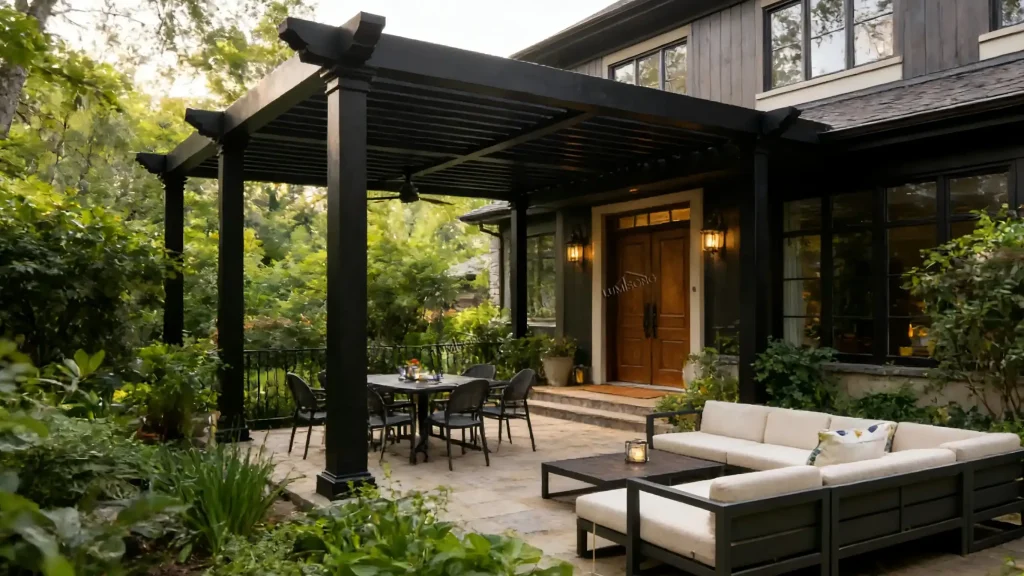
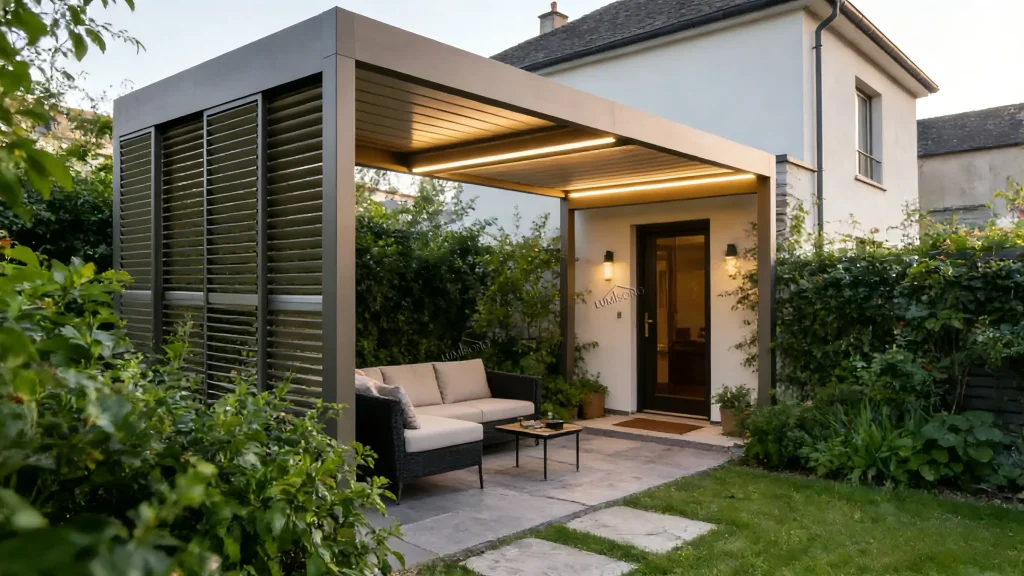
Wall-mounted pergolas are directly attached to the home’s exterior.
They typically cover:
- Patios
- Terraces
- Outdoor dining areas
- Transitional indoor-outdoor zones
How Wall-Mounted Structures Feel Different
Unlike freestanding pergolas, wall-mounted systems emphasize continuity.
They feel:
- Integrated
- Natural to access
- Closely tied to daily routines
Stepping under a wall-mounted pergola often feels like simply moving the interior outward.
Spatial Flow and Daily Use
Wall-mounted pergolas excel at:
- Supporting everyday activities
- Making outdoor space part of daily habits
- Encouraging frequent, unplanned use
Meals, coffee breaks, and casual moments flow more naturally when the pergola sits at the threshold of the home.
Structural and Architectural Integration
Because they connect to the building, wall-mounted pergolas require:
- Careful load distribution
- Compatibility with facade materials
- Alignment with architectural proportions
When executed well, they enhance the home’s architectural rhythm rather than interrupt it.
How to Decide: Use Before Structure
Rather than asking which type looks better,a more useful question is:
How do you imagine using the space, week after week?
- If the space is part of daily life → wall-mounted
- If the space is meant as a retreat → freestanding
In many projects, both can coexist,serving different moods and functions across the property.
Conclusion: Structure Shapes Experience
Freestanding and wall-mounted pergolas do not compete — they communicate differently.
One creates separation and intention.
The other creates flow and continuity.
Choosing the right structure means designing for how outdoor living actually unfolds in your life.
Why This Article Matters
- Clarifies a common but underexplained decision
- Connects structure with emotional experience
- Helps clients avoid choosing purely by appearance