- +86 15881076666
- info@lumisong.com

Blogs
Home
How Do Pergolas Perform in Wind and Changing Weather? A Practical Guide to Structural Stability and Outdoor Durability
Understanding Structural Stability Without Overengineering
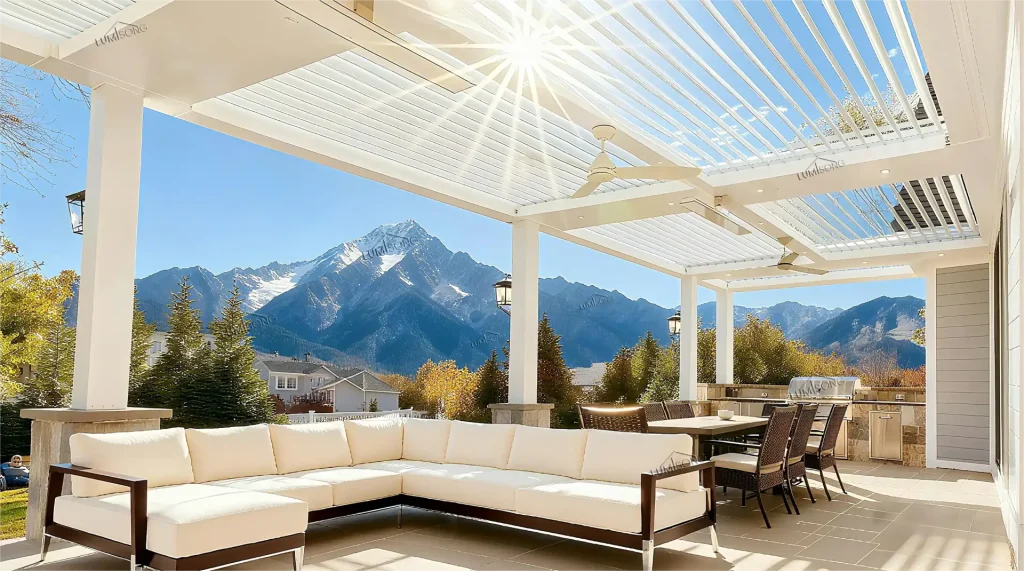
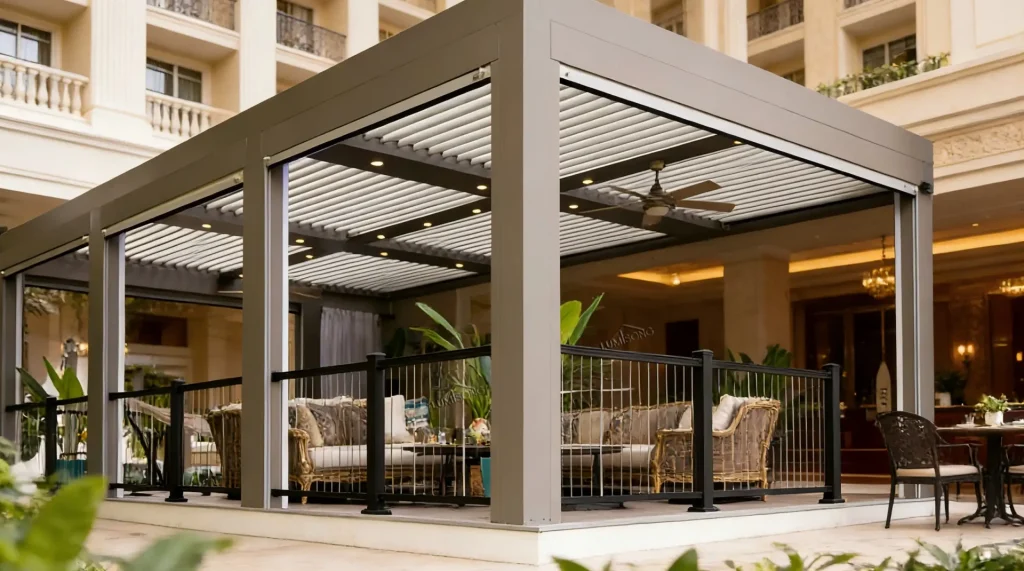
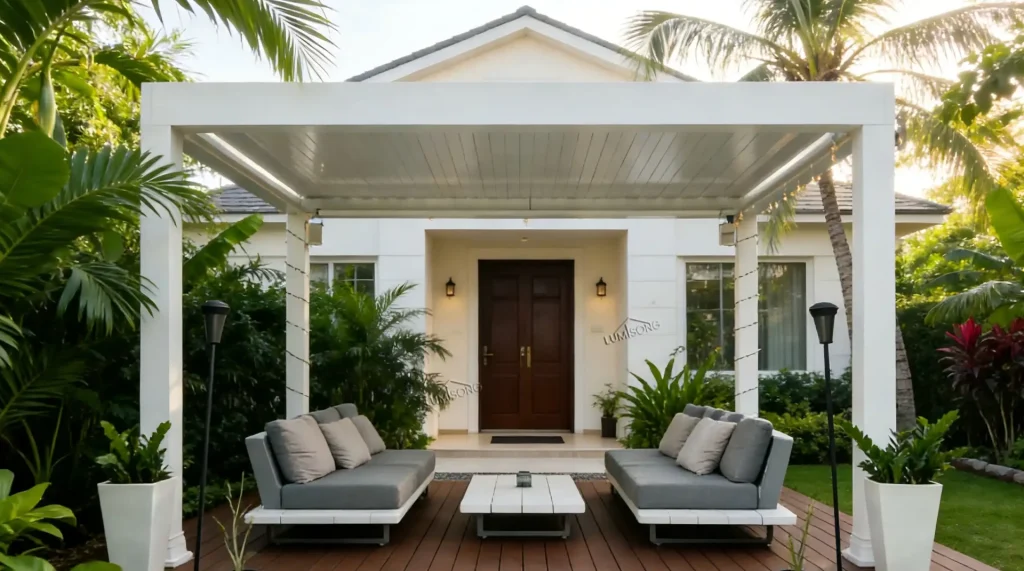
Introduction: Weather Is Predictable — Anxiety Is Not
When homeowners think about outdoor structures,rain is usually the first concern.
Wind comes later — often after installation,or after the first strong storm.
Questions usually sound like this:
- Will the pergola feel stable when it’s windy?
- Will moving parts rattle or vibrate?
- Should I be worried during seasonal storms?
Understanding wind performance is less about fear and more about how structure, material, and design work together.
Wind Is a Structural Question, Not a Feature
Wind resistance is often described as a “feature.”
In reality, it is the result of structural logic.
A pergola does not resist wind by force alone.
It manages wind through:
- Geometry
- Load distribution
- Anchoring strategy
- Material behavior
When these elements are balanced,wind becomes something the structure accommodates,not something it fights.
Why Pergolas Behave Differently From Buildings
Pergolas are outdoor structures by design.
They are not enclosed volumes.
This distinction matters.
Because pergolas are open:
- Wind can pass through rather than build pressure
- Forces are distributed across columns and beams
- Structural stress is reduced compared to solid walls
This openness is not a limitation —it is part of why pergolas remain stable without excessive mass.
The Role of Aluminum in Wind Performance
Material choice plays a central role in how pergolas respond to weather.
Aluminum is widely used in modern pergola systems because it offers a unique balance:
- High strength-to-weight ratio
- Dimensional stability
- Resistance to fatigue over time
Unlike heavier materials, aluminum structures do not rely on sheer mass to remain stable.
Instead, they rely on precision and geometry.
This allows pergolas to feel solid without appearing bulky or overbuilt.
How Structural Geometry Manages Wind
Good wind performance begins with geometry.
Key design principles include:
Column Proportion
Columns must be strong enough to resist lateral forces
without appearing visually dominant.
Beam Integration
Horizontal elements distribute wind load across the entire structure rather than concentrating it.
Connection Points
Well-designed joints allow forces to transfer smoothly without stress accumulation.Together, these elements create a calm, confident structure — even in motion.
Louvered Roof Systems and Wind Response
Louvered pergolas introduce moving components,which naturally raises questions about wind behavior.
In practice, adjustable louvers improve wind response when designed correctly.
Open or Tilted Louvers
- Allow air to pass through the roof
- Reduce uplift pressure
- Minimize vibration
Closed Louvers
- Present a smooth, unified surface
- Work in coordination with drainage systems
- Remain stable under typical weather conditions
Rather than resisting wind,louvered systems adapt to it.
Anchoring: Where Stability Truly Begins
No pergola performs well without proper anchoring.
Anchoring determines how wind forces are transferred from the structure into the ground or building.
Common anchoring strategies include:
- Anchoring into concrete foundations
- Securing to reinforced hardscape
- Structural attachment to existing buildings
The goal is not rigidity,but controlled movement and load transfer.
Wind Performance Is Regional, Not Absolute
There is no universal wind rating that applies equally everywhere.
Wind performance must be understood in the context of:
- Local climate patterns
- Seasonal wind behavior
- Exposure (coastal, open terrain, urban settings)
Well-designed pergola systems are evaluated against realistic regional conditions,not extreme theoretical scenarios.
What Good Wind Performance Feels Like
The best indicator of proper wind design is not silence —but predictability.
A well-designed pergola:
- Does not creak or rattle excessively
- Does not feel tense or strained
- Maintains visual calm during movement
Good performance feels unremarkable —and that is intentional.
Weather as Part of Outdoor Living
Outdoor living is not about eliminating weather.
It is about coexisting with it.
Pergolas that acknowledge wind and climate rather than trying to overpower them tend to remain comfortable, durable,and visually stable over time.
A Balanced Design Philosophy
At LUMISONG, wind performance is addressed through structure, proportion, and system integration.
Not through overengineering,but through thoughtful design that respects both environment and experience.
Because outdoor spaces should feel secure —without feeling heavy.
Explore Further
- Freestanding vs Wall-Mounted Pergolas
- Designing Outdoor Spaces for All Seasons
- Explore Pergola Systems